
Source photo: Global Coalition to Protect Education from Attack
Protecting Schools, Protecting Children, Protecting the Future
Every September, as millions of children return to school, we are reminded that education is more than a classroom, a textbook, or an examination. Education is a fundamental human right and an important foundation for peace, development, and social stability.
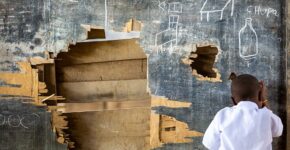
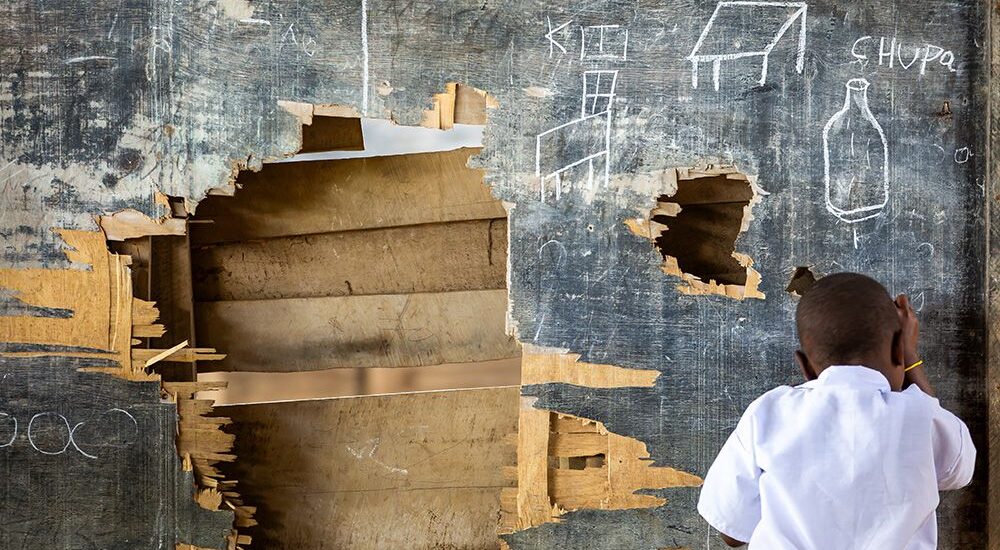
Yet for millions of children living in conflict-affected and fragile communities, going to school can come with fear and uncertainty.
On 9 September, the world observes the International Day to Protect Education from Attack. The 2026 global theme is:
“Can Education Survive Attack? The Resilience of Human Communities.”
The question is particularly important for Africa.
According to the United Nations, attacks on education increased sharply worldwide in 2024 and 2025, with 8,566 reported attacks on education, more than 40 percent higher than the previous two-year period. These attacks harmed at least 10,600 students, teachers, professors, and education personnel.
Africa is not outside this crisis. UNICEF reported in 2024 that more than 2,500 attacks on schools had been verified across Africa over the preceding nine years.
In West and Central Africa alone, nearly 15,000 schools have been forced to close because of violence and conflict, with the number of closures almost doubling since 2019. UNICEF and the Norwegian Refugee Council estimated that about three million children were affected by conflict-related school closures in 2025.
These numbers represent much more than statistics. Behind every closed school is a child whose education has been interrupted. Behind every attack is a teacher who may be afraid to return to work, a parent who fears sending a child to school, and a community whose future is placed at risk.
What Does an Attack on Education Look Like?
Attacks on education are not limited to the destruction of school buildings.
They can include the killing or injury of students and teachers, abduction, sexual violence, recruitment of children by armed groups, threats against education personnel, destruction or occupation of schools, military use of educational facilities, and attacks that prevent children from safely accessing education.
Military use of schools is particularly concerning. The Global Coalition to Protect Education from Attack identified more than 1,910 reports of military use of schools and universities in at least 25 countries during 2024–2025, including several African countries such as Cameroon, the Democratic Republic of the Congo, Ethiopia, Mali, Mozambique, Niger, Nigeria, Somalia, South Sudan and Sudan.
When a school becomes associated with military activity, it can cease to be perceived as a safe civilian space and may expose students and teachers to additional risks.
How Can We Protect Education from Attack?
Protecting education requires more than one solution. It requires prevention, preparedness, community participation, accountability, and resilience.
1. Strengthen Unarmed Physical Protection
Schools can introduce appropriate unarmed protective measures based on the risks in their communities.
These may include trained school safety personnel, protection committees, secure entry and exit procedures, adequate lighting, communication systems, safe waiting areas, emergency procedures, and appropriate physical improvements to school infrastructure.
The purpose is not to turn schools into militarized spaces. Rather, schools should remain safe civilian environments where children can learn without unnecessary fear.
2. Use Appropriate Protective Security Measures in High-Risk Contexts
In areas experiencing persistent armed attacks, authorities may need additional protective arrangements to safeguard students, teachers, and school infrastructure.
Where such measures are considered, they should be lawful, proportionate, carefully assessed, and designed to protect—not militarize—education.
The protection of education must always remain consistent with international humanitarian law and the principle that schools should be preserved as civilian spaces.
3. Use Dialogue and Negotiation
Protection does not always have to come through physical security.
Dialogue can save lives.
Governments, community leaders, humanitarian organizations, education authorities, and, where appropriate, parties to conflict can work toward agreements that prevent attacks on schools and prohibit the use of educational facilities for military purposes.
The Safe Schools Declaration provides an important framework for strengthening political commitments to protect education during armed conflict.
Parties to conflict must respect their obligations under international humanitarian law and refrain from attacking educational institutions and personnel.
4. Establish Early-Warning and Alert Systems
Communities cannot respond to threats they do not know about.
Schools can establish appropriate early-warning and communication systems connecting school administrators, teachers, parents, students, community leaders, and relevant authorities.
Depending on the context, this could include:
- Emergency telephone networks
- SMS alerts
- Community communication networks
- School safety committees
- Agreed emergency codes
- Designated emergency contacts
- Procedures for temporarily suspending classes when credible threats arise
Early warning should lead to early and coordinated action.
5. Maintain Education Through Alternative Delivery
When schools are damaged, occupied, temporarily closed, or unsafe, education should not simply disappear.
Alternative learning arrangements can help maintain continuity.
Depending on the local context, these may include:
- Temporary learning spaces
- Community-based education
- Radio-based learning
- Online learning
- E-learning platforms
- WhatsApp learning groups
- Flexible learning schedules
- Take-home learning materials
Alternative education should not become a permanent substitute for safe schools. Its purpose is to ensure that conflict does not permanently deprive children of their right to learn.
6. Prioritize Psychosocial Support
Protecting education also means protecting the mental and emotional well-being of children and teachers.
Children exposed to violence may experience fear, anxiety, grief, trauma, isolation, difficulty concentrating, and reluctance to return to school.
Schools should therefore strengthen:
- Child-friendly learning environments
- Psychosocial support
- Referral systems
- Teacher and caregiver training
- Peer-support mechanisms
- Safe spaces for children
- Child protection procedures
- Codes of conduct for education personnel
Teachers should also receive appropriate support. A resilient education system cannot depend on teachers who are themselves unsupported and overwhelmed.
7. Develop Comprehensive School Safety and Security Plans
Every school should have a plan for prevention, preparedness, response, and recovery.
School safety plans should involve school leadership, teachers, students, parents, community representatives, child-protection actors, relevant government ministries, humanitarian organizations, and other appropriate partners.
The plan should identify:
What are the risks?
Who is responsible for responding?
How will information be communicated?
Where will children go during an emergency?
How will learning continue?
How will affected children receive protection and psychosocial support?
How will the school recover after an incident?
A school should not wait for an attack before deciding what to do.
Protection Must Also Address Violence Inside Schools
When discussing attacks on education, we must not focus only on armed conflict.
A school can be physically intact and still be unsafe.
Conflict can occur between students and teachers. Tensions can emerge between teachers and administrators. Bullying, harassment, sexual abuse, discrimination, emotional violence, and other forms of misconduct can undermine children’s safety and well-being.
This is why school security must be understood broadly.
A safe school is one where children are protected from external threats and from violence, exploitation, abuse, intimidation, and discrimination within the educational environment.
This is also where emotional intelligence and conflict management become important.
Children should be taught how to communicate, manage emotions, resolve disagreements, understand differences, seek help, and respond to conflict without resorting to violence.
Teachers and school administrators should likewise be equipped with conflict-management and safeguarding skills.
The Way Forward for Africa
Africa cannot protect education through governments alone.
It requires a whole-of-society approach.
Governments must strengthen policies and accountability mechanisms that protect schools and education personnel.
Schools must develop practical safety and safeguarding systems.
Parents and communities must participate in protecting children.
Teachers must be trained and supported.
Humanitarian organizations must strengthen education in emergencies and child-protection programming.
Young people must be given a voice in decisions affecting their safety and education.
Universities and research institutions should document attacks, study emerging risks, and generate evidence that can improve policy.
And parties to armed conflict must respect international humanitarian law and protect schools from attack and military use.
Most importantly, education must remain a priority during crises—not an afterthought.
The closure of a school is not simply the closure of a building. It can mean the loss of routine, protection, social connection, learning, opportunity, and hope.
The goal should therefore not simply be to rebuild schools after they are attacked.
We must build education systems that are prepared before attacks happen, resilient when crises occur, and capable of recovering afterwards.
A Call to Action
At Wem’ Afrika, we believe that schools should be more than places where children acquire academic knowledge.
They should be spaces where children develop social intelligence, emotional intelligence, leadership, resilience, respect, and conflict-resolution skills.
Our Conflict Management Department is committed to exploring these issues and promoting conversations around safer and more resilient educational institutions.
As children return to school this September, let us ask ourselves:
Can education survive attack?
Our answer must be:
Yes—but only if we choose to protect it.
Protect the child.
Protect the teacher.
Protect the school.
Protect the right to learn.
Protect the future of Africa.
Wem’ Afrika — Empower. Educate. Elevate.