
In our increasingly digital world, the physical protection of our infrastructure is often overlooked. While we dedicate immense resources to cybersecurity and network defense, the physical sites that house our critical operations where servers, proprietary data, and essential hardware live remain vulnerable to physical breaches. Whether it’s an office complex, a manufacturing plant, or a logistical hub, ensuring the safety of your site requires a proactive, multi-layered approach to security.
For the Wem’Afrika security department, the goal is simple: to create an environment where security is integrated into every aspect of the facility, from the outermost perimeter to the interior infrastructure.
The 5Ds: Principles of Physical Security Design
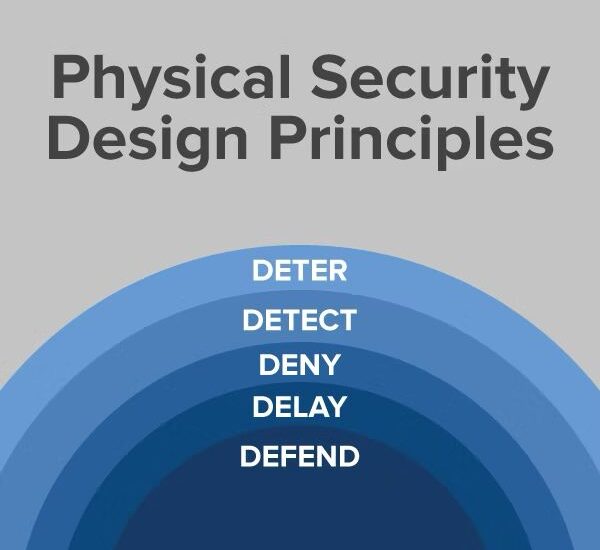
The foundation of a robust security strategy is built on the “onion skin” theory, which relies on the 5Ds: Deter, Detect, Deny, Delay, and Defend. By stacking these layers, you create a comprehensive defense system that forces potential threats to navigate multiple obstacles, buying your team crucial time to respond.
- Deter: This is your first line of defense. It includes visible measures like anti-climb fencing, high-security gates, clear signage, and surveillance cameras. The goal is to make the site look like a “hard target” before an incident even begins.
- Detect: If deterrence fails, detection must succeed. This layer encompasses everything from perimeter alarms to advanced monitoring solutions like drone detection, buried sensors, and radar systems.
- Deny: This layer uses physical barriers to restrict access. It involves crash-rated gates, bollards, and wedge barriers that prevent unauthorized vehicles or individuals from moving past specific checkpoints.
- Delay: If an breach is in progress, the objective shifts to slowing down the intruder. Reinforced doors, high-security cabling, and internal compartmentalization make it difficult for an attacker to reach their objective quickly.
- Defend: This is the human and procedural element—your security personnel and incident management protocols. When technology identifies a threat, your team must be trained, prepared, and positioned to neutralize it.
Implementing Intelligent Surveillance
Modern video monitoring is far more than just a recording device. Effective site security leverages intelligent technologies to keep eyes on the perimeter 24/7.
Thermal imaging technology, for example, is essential for maintaining visibility in low-light conditions, fog, or heavy rain. When paired with radar, these systems can distinguish between actual threats and benign activity like local wildlife or blowing debris, significantly reducing the number of false alarms.
Furthermore, implementing Video Content Analysis (VCA) allows security teams to use algorithms to identify potential threats in real-time, such as unauthorized license plates or facial recognition, enabling a proactive rather than reactive stance.
Infrastructure and Access Control
To ensure that only authorized personnel reach the heart of your operation, access control must be rigorous.
- Limit Entry Points: A common mistake is having too many ways to enter a facility. By consolidating access to the absolute minimum number of points, you can focus your security resources, technology, and staff training where they are most effective.
- Blast and Ballistic Protection: At high-traffic entry points, consider the safety of the guards themselves. Blast-resistant or bullet-resistant guard booths provide necessary protection for personnel who are the first line of defense in a worst-case scenario.
- Role-Based Access: Within the facility, implement strict role-based access controls. This ensures that even once someone is on the campus, they are restricted to only the areas necessary for their specific function.
The Human Element: Training and Maintenance
Even the most advanced technology is ineffective if the team operating it is unprepared.
Incident Management
Stress levels escalate quickly during a breach. Developing a detailed security checklist and conducting regular threat response drills ensures that your personnel can perform under pressure. Every team member should know exactly how to operate barriers, where to find documentation, and who to contact during an emergency.
Preventative Maintenance
Equipment like automatic gates, pop-up barriers, and sensors require consistent care. A single malfunction can create a gap in your security perimeter. We recommend partnering with technical security services to handle routine maintenance and provide 24/7 emergency support. This keeps your equipment reliable and allows your internal team to focus on the core mission rather than equipment troubleshooting.
Conclusion
As security threats evolve, our strategies must grow more sophisticated. By adopting the 5Ds and focusing on a proactive blend of technology, infrastructure, and human training, organizations like Wem’Afrika can significantly improve their resilience. Security is not a one-time project, but a continuous commitment to staying one step ahead of the next potential challenge.