
Introduction
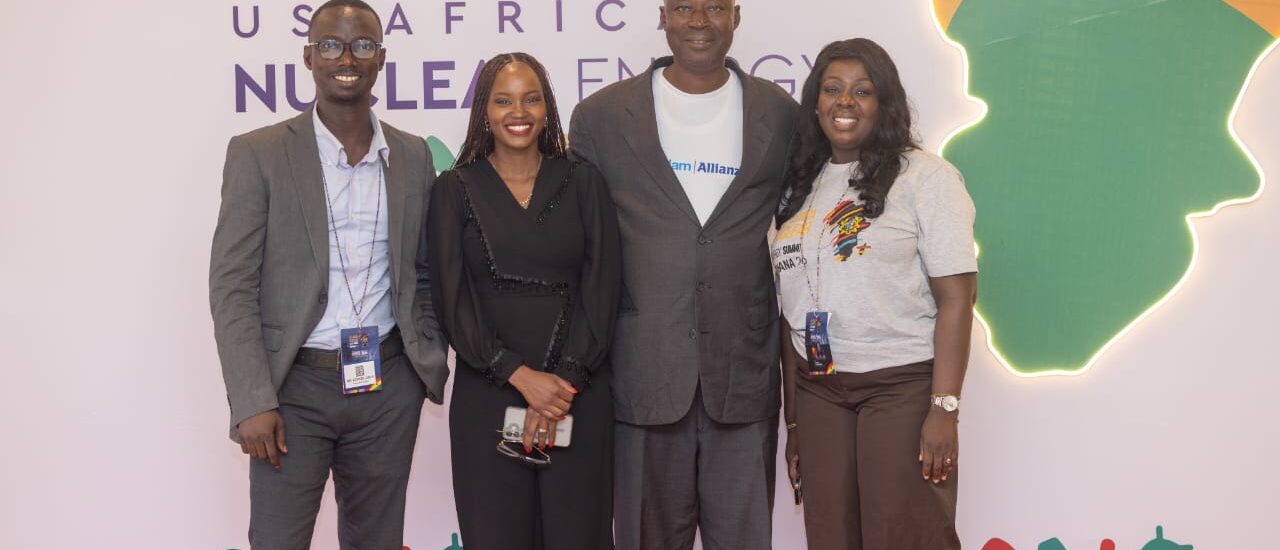
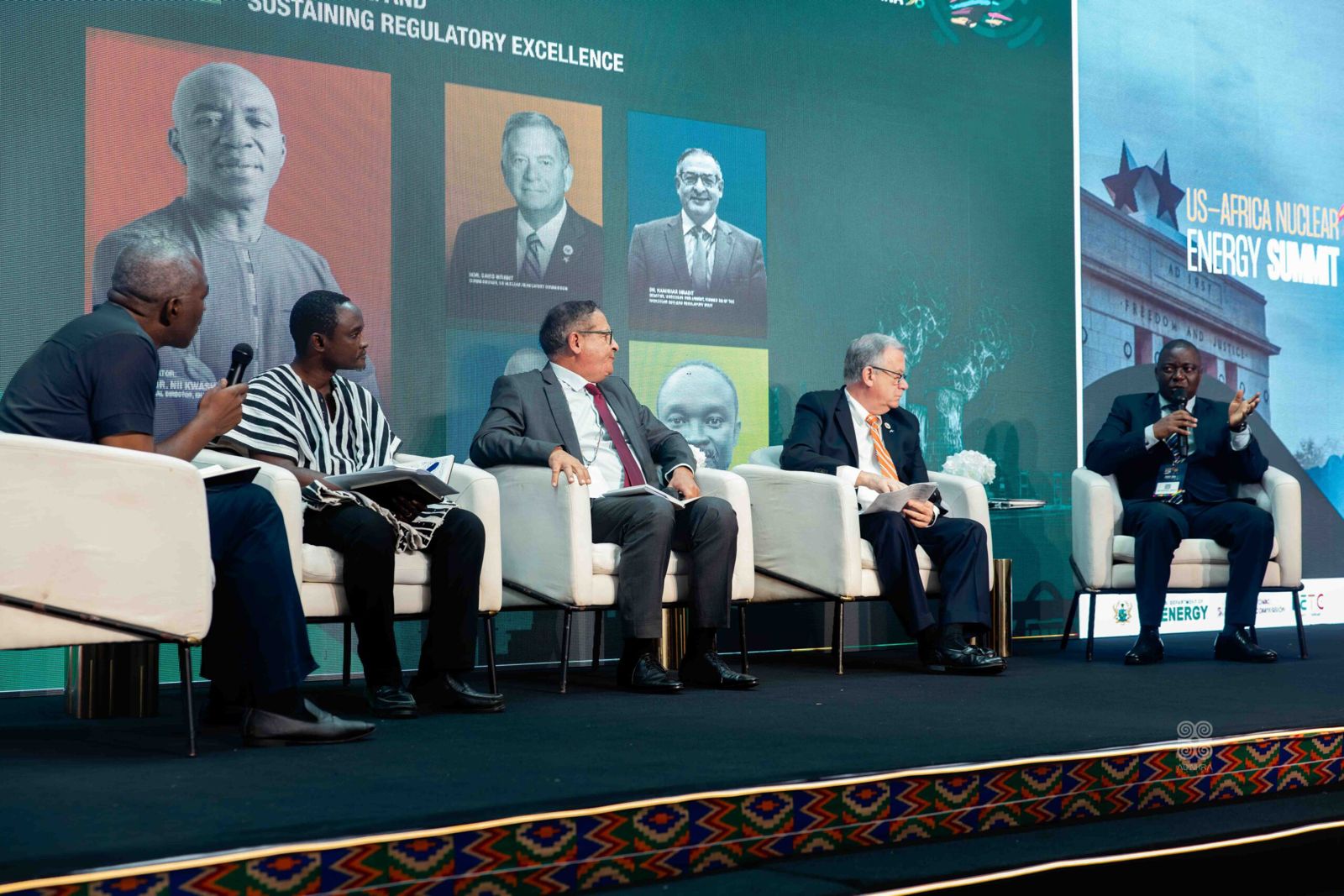
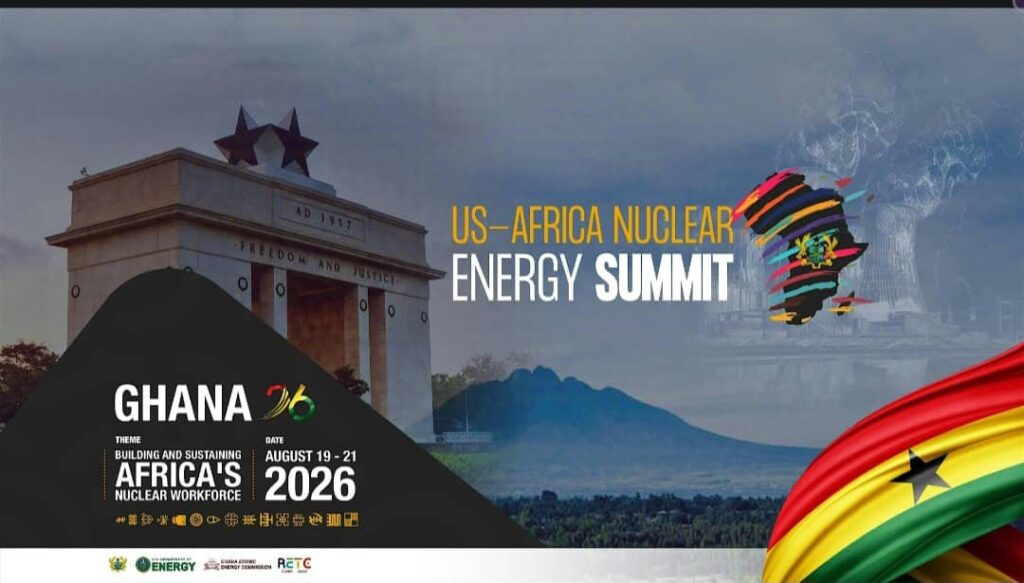
The 2026 U.S.–Africa Nuclear Energy Summit (USANES 2026) was held from 19th – 21st August 2026 at the Labadi Beach Hotel in Accra, Ghana, under the theme
“Building and Sustaining Africa’s Nuclear Workforce.”
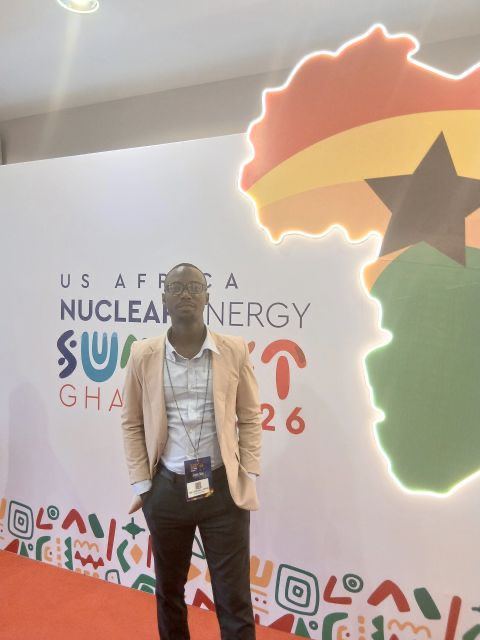
Ezekiel Amarh Ashai, unit lead for the security department of Wem’afrika represented the organisation in the summit. The summit was organised by the U.S. Department of Energy (DOE), Office of Nuclear Energy, in partnership with the Ghana Atomic Energy Commission (GAEC), under the auspices of the U.S.–Ghana Regional Energy Training Centre. It was the third edition of the U.S.–Africa Nuclear Energy Summit.
The summit came at an important stage in Africa’s nuclear-energy development. Several African countries are exploring, planning or developing nuclear power programmes to address increasing electricity demand, energy security, industrialization and decarbonization. Against this background, USANES 2026 shifted significant attention from the question of which reactor technology to deploy toward the equally important question of who will design, regulate, construct, operate, secure and sustain Africa’s nuclear programmes.
Purpose and Objectives of the Summit
The central objective of USANES 2026 was to examine how Africa can develop the human, institutional and technical capacity required for safe, secure, sustainable and economically beneficial nuclear-energy programmes.
The major objectives included:
- Developing Africa’s nuclear workforce across the entire nuclear lifecycle.
- Building competent nuclear regulatory institutions.
- Integrating artificial intelligence (AI), cybersecurity and digital technologies into the future nuclear workforce.
- Strengthening cooperation between governments, universities, regulators, industry and international partners.
- Supporting African countries developing nuclear programmes through regional training and knowledge-sharing mechanisms.
“Human capacity should be treated as a core component of nuclear infrastructure. Workforce development cannot be an afterthought; it must begin alongside the development of nuclear facilities and programs.” Ezekiel Ashai
Participants and Stakeholders
The summit brought together stakeholders from different parts of the nuclear-energy ecosystem, including:
- African governments and policymakers;
- U.S. government and Department of Energy representatives;
- Nuclear regulatory authorities from Ghana
- Nuclear power programme organisations;
- Universities and research institutions;
- Technical and vocational institutions;
- Nuclear scientists and engineers;
- Industry and private-sector representatives;
- Energy professionals;
- Young professionals and students;
- Development partners and international organisations.
- Social media influencers
The participation of these different groups was important because a nuclear programme cannot be sustained by nuclear engineers alone. It requires physicists, engineers, technicians, welders, electricians, civil engineers, instrumentation and control specialists, cybersecurity professionals, lawyers, economists, project managers, regulators, emergency planners, radiation-protection specialists and other professionals.
The Three-Day Summit
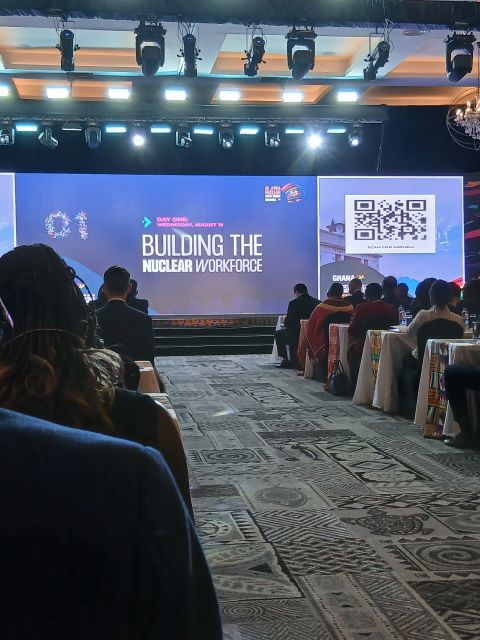
Day One – Building the Nuclear Workforce
Foundations of Africa’s nuclear workforce and the need to establish an integrated education and training pipeline.
Basic Education → STEM → University Education → Technical/Vocational Training → Professional Nuclear Training → Specialized Expertise → Leadership
This pipeline is essential to ensure a continuous supply of skilled professionals capable of supporting nuclear programmes throughout their lifecycle.
Participants also emphasized stronger collaboration between government, academia, and industry. Universities can provide theoretical knowledge, technical institutions can develop practical skills, and industry can offer workplace experience and specialized competencies.
The University of Ghana’s School of Engineering Sciences highlighted the importance of developing this talent pipeline from basic education through professional and expert levels. The institution also emphasized the need for greater public education to address fear, misconceptions, and knowledge gaps surrounding nuclear technology.
Building Africa’s nuclear future begins with investing in people from the classroom to leadership.
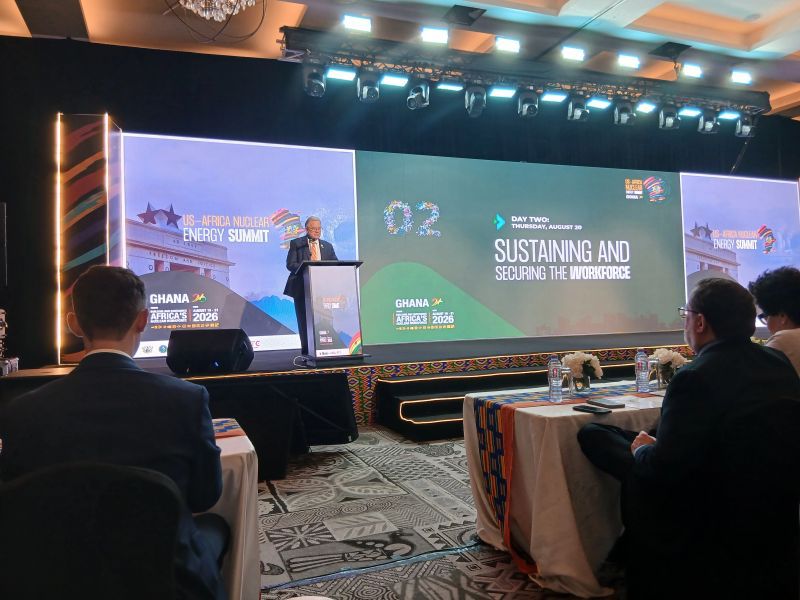
Day Two – Securing and Sustaining the Nuclear Workforce
A major message emerging from the summit was that recruiting nuclear professionals is not sufficient. Countries must also be able to retain, continuously train and replace them.
Nuclear facilities can operate for many decades. Consequently, a country beginning its nuclear programme today must think about workforce requirements not only for the construction period but also for:
- commissioning;
- operation;
- maintenance;
- safety;
- nuclear security;
- safeguards;
- radioactive waste management;
- emergency preparedness;
- regulatory oversight;
- plant modernisation;
- decommissioning.
This makes succession planning particularly important.
Experienced professionals eventually retire or move to other institutions. Without mechanisms for mentoring, documentation and knowledge transfer, valuable institutional knowledge can be lost.
The summit therefore highlighted the need for:
- continuous professional development;
- knowledge management;
- mentorship;
- regional training;
- professional networks;
- succession planning;
- attractive career pathways;
- opportunities for young professionals.
Securing the Nuclear Workforce
Another important dimension was the relationship between workforce development and nuclear security. A nuclear workforce must not only be technically competent; personnel must also understand their responsibilities regarding:
- physical protection;
- insider-threat prevention;
- cybersecurity;
- access control;
- information security;
- security culture;
- confidentiality;
- nuclear material security;
- emergency response.
This is particularly relevant because modern nuclear facilities increasingly depend on digital systems. A competent nuclear workforce therefore requires professionals who understand both nuclear technology and security principles.
For Africa, this creates an opportunity to develop interdisciplinary professionals with knowledge of nuclear engineering, nuclear security, cybersecurity, data science and regulatory requirements.
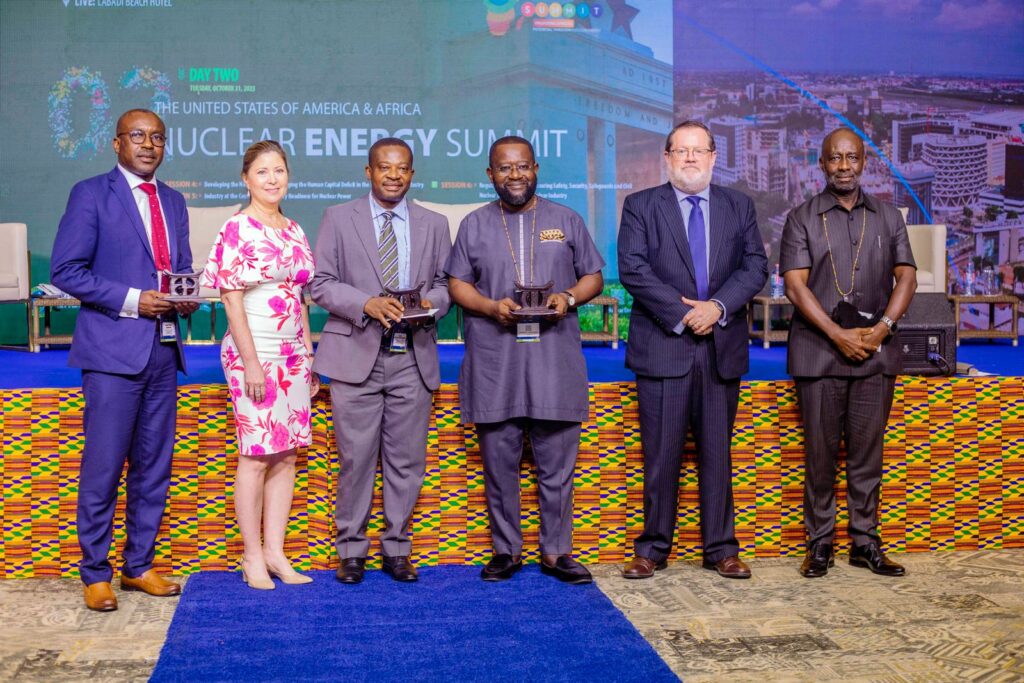
Day Three – Artificial Intelligence and the Future Nuclear Workforce
One of the most forward-looking components of USANES 2026 was the examination of nuclear energy in the AI era. The official summit programme identified the third day as the workshop:
“Deploying Nuclear in the AI Era: Rethinking the Workforce.” The discussions considered how AI and advanced digital technologies may influence nuclear energy.
Potential applications include:
- predictive maintenance;
- equipment monitoring;
- fault detection;
- operational decision support;
- reactor design;
- safety analysis;
- licensing support;
- manufacturing;
- construction;
- emergency response;
- data analysis;
- inspection and diagnostics.
The U.S. Department of Energy indicated that it is exploring AI applications that could accelerate reactor design, licensing, manufacturing and construction while supporting nuclear facility operations. This means that the nuclear professional of the future may need a combination of:
Nuclear science + engineering + AI/data science + cybersecurity + ethics + regulation.
However, AI should complement rather than replace appropriate human responsibility and nuclear safety oversight. Nuclear applications require strong validation, verification, cybersecurity, reliability and human accountability.
Ghana’s Nuclear Energy Programme
The summit was particularly significant for Ghana because Ghana is progressing toward the development of its first nuclear power programme. At the opening, Ghanaian government representatives stated that the country had entered Phase 2 of the IAEA Milestones Approach for developing nuclear power infrastructure. Government representatives also reported progress in site studies, institutional strengthening, stakeholder engagement and discussions with technology vendors. Ghana’s energy authorities have identified nuclear power as part of a broader strategy to diversify the country’s electricity-generation mix.
The Energy Minister, John Abdulai Jinapor, described nuclear energy as a critical component of the country’s long-term energy strategy, particularly in the context of increasing electricity demand and industrialisation.
The summit therefore provided Ghana with an opportunity to demonstrate its emerging nuclear capabilities while also positioning Accra as a location for regional nuclear capacity development.
The Regional Energy Training Centre
One of the important foundations behind the summit is the Regional Energy Training Centre in Ghana. The United States and Ghana formally launched the centre in 2024 as a regional training hub intended to support Ghana and other African countries developing civil nuclear-energy programmes. Training areas include workforce development, reactor design and operation, project development, nuclear security and spent-fuel management.
This model has considerable regional significance.
Instead of every African country having to immediately establish every specialised training facility independently, countries can potentially share:
- training laboratories;
- simulation facilities;
- specialist instructors;
- regulatory training;
- nuclear-security programmes;
- technical courses;
- professional development programmes.
The U.S. DOE has emphasised that its objective is to develop lasting institutional partnerships and technical capacity, rather than simply delivering isolated training programmes.
Ghana – U.S. Nuclear Cooperation
The summit also demonstrated the growing depth of Ghana–U.S. cooperation in peaceful nuclear energy. Ghanaian officials reported that negotiations toward a U.S.– Ghana Section 123 Agreement on peaceful nuclear cooperation had progressed, with the agreement initialled and awaiting the required approvals.
The two countries’ cooperation also includes the Regional Energy Training Centre and technical exchanges covering areas such as reactor technology, cybersecurity, quality assurance and spent-fuel management.
It is important, however, to distinguish cooperation and workforce-development milestones from actual reactor construction or financing milestones.
Public reporting following the summit did not identify a new final investment decision, financial close or construction licence for Ghana arising from USANES 2026.
Importance to Africa
Technology: Access to appropriate and economically viable nuclear technologies.
Institutions: Strong regulatory, legal, financial, educational and operational institutions.
Workforce: Scientists, engineers, technicians, regulators, operators, security professionals and leaders capable of sustaining the programme.
Weakness in any one of these areas can undermine the others.
Challenges Identified
- Shortage of specialised personnel; Africa needs more nuclear scientists, engineers, technicians, regulators, operators and specialists across the nuclear lifecycle. GAEC leadership described skilled human resources as a critical determinant of the continent’s nuclear ambitions.
- Brain drain; African countries may train professionals who subsequently seek opportunities abroad. Sustainable nuclear programmes therefore require attractive career structures and opportunities for professionals to contribute within Africa.
- Regulatory capacity; Regulators must have sufficient technical expertise, independence, resources and legal authority to oversee nuclear activities effectively.
- Financing; Developing nuclear infrastructure requires significant long-term investment. Workforce development itself also requires sustained funding for universities, laboratories, simulators and professional training.
- Industrial capacity; Local participation requires companies capable of meeting demanding nuclear-quality and safety requirements.
- Digital and cybersecurity risks; As nuclear systems become more digital, the workforce must understand cybersecurity and the implications of AI-enabled systems.
Recommendations for Africa
The discussions at USANES 2026 pointed toward several practical measures.
1. Develop national nuclear workforce strategies. Every country pursuing nuclear power should establish a workforce plan covering the entire nuclear lifecycle.
2. Strengthen universities and technical institutions. Nuclear education should not be limited to postgraduate nuclear engineering. Undergraduate programmes in physics, engineering, computer science, cybersecurity, mathematics and related fields should feed into the nuclear workforce.
3. Expand technical and vocational training. Africa should deliberately train technicians, welders, electricians, mechanics, instrumentation specialists and other skilled workers required for nuclear construction and operation.
4. Establish regional centres of excellence. Specialised and expensive facilities can be shared among African countries through regional cooperation.
5. Integrate AI and cybersecurity into nuclear education. Future nuclear curricula should include data science, AI, cybersecurity, digital instrumentation and control, ethics and regulatory considerations.
6. Strengthen industry–academia partnerships. Universities should work directly with nuclear organisations and industry to ensure that graduates possess both theoretical and practical competencies.
7. Develop succession and knowledge-management systems. Countries should establish mechanisms to transfer expertise from experienced professionals to younger generations.
8. Engage the African diaspora. African scientists and engineers working abroad can contribute through visiting lectureships, joint research, professional exchanges, technical training and collaborative projects.
Relevance to Ghana
For Ghana, the summit has particular significance because the country is moving beyond preliminary discussion toward the development of the institutional framework required for nuclear power.
The most important implication is that Ghana’s nuclear programme should not be viewed simply as a power-plant project. It should be viewed as a national programme involving:
Education → Research → Regulation → Engineering → Construction → Nuclear Security → Operations → Waste Management → Decommissioning.
This creates opportunities for Ghanaian universities, technical universities, research institutions, professional organisations and private companies.
It also creates an important opportunity for young Ghanaian professionals to develop expertise before the nuclear industry reaches the construction and operational stages.
Relevance to Nuclear Security
From a nuclear-security perspective, the summit was especially important because workforce development and security are inseparable.
A nuclear facility may have advanced physical protection systems, but the effectiveness of those systems ultimately depends on competent people.
Personnel must understand:
- security culture;
- insider threats;
- access authorisation;
- cybersecurity;
- nuclear material accounting and control;
- physical protection;
- information security;
- emergency response;
- reporting responsibilities.
Therefore, Africa’s nuclear workforce strategy should deliberately produce professionals who understand both nuclear safety and nuclear security.
16. Conclusion
The 2026 U. S.– Africa Nuclear Energy Summit placed an essential issue at the centre of Africa’s nuclear – energy conversation: the continent needs not only nuclear technology but also the people and institutions capable of using that technology safely, securely and sustainably.
The theme, “Building and Sustaining Africa’s Nuclear Workforce,” therefore goes beyond employment. It encompasses education, technical competence, regulation, nuclear safety, nuclear security, cybersecurity, AI, leadership, research, industrialisation and knowledge transfer.
For Ghana, the summit was particularly timely as the country advances through the IAEA Milestones Approach. For Africa, it provided a platform for countries at different stages of nuclear development to exchange experience and explore regional approaches to workforce development.
The fundamental lesson is that the sustainability of Africa’s nuclear programmes will depend on the strength of its human capital and institutions alongside its technology and financing.
Wem’afrika is committed for a peaceful society and the peaceful use of Nuclear materials .
Author:
Ezekiel Amarh Ashai, Ezekiel serves as the Unit Lead for the Security Department at Wem’Afrika, where he coordinates and moderates professional webinars focused on nuclear security and governance. He is an educator and a committed advocate of the Sustainable Development Goals (SDGs), with a strong professional interest in nuclear power and emerging nuclear technologies.
Holding an MPhil in Nuclear Science and Technology, Ezekiel is particularly focused on advancing the safe, secure, and responsible use of nuclear technologies. His work centers on strengthening capacity, promoting awareness, and fostering informed dialogue on nuclear security across Africa.
He is passionate about building resilient systems, supporting youth engagement, and contributing to sustainable development through education and policy-oriented initiatives in the nuclear sector.
Wem’afrika representative in Ghana