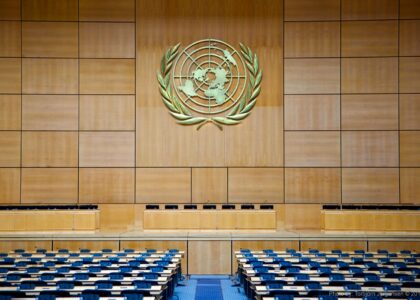

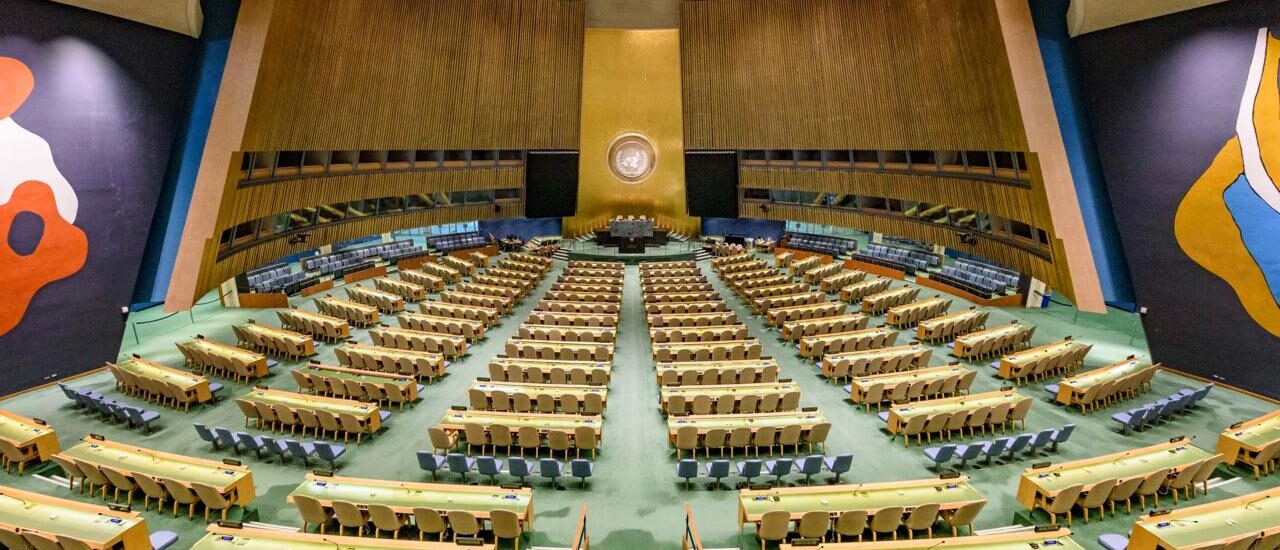
The 81st session of the United Nations General Assembly (UNGA81) in September 2026 was more than a series of speeches; it was a loud and clear
Climate Resilience: Demanding increased declaration of a “Great Reset” in global relations. For organizations like Wem’Afrika, understanding these shifts is the difference between working alongside global trends and being left behind by them.
Over the years, there have been several shifts in global politics either from the end of health, climate, conflict or humanitarian, migration and mental health and to that shift diplomacy is the ultimate goal for every nation and every state representative.
We are going to access the areas that represent the African continent and discuss issues that represent the organisation Wem’afrika.
The African Agenda: Words Spoken
African leaders moved beyond the traditional request for aid, focusing instead on structural justice. The overarching theme was a rejection of the status quo where African nations act as a passive arena for external interests.
The Push for Structural Reform
A recurring theme across African delegations was the glaring discrepancy between Africa being the primary focus of UN Security Council resolutions and its lack of permanent representation.
The Core Argument: Leaders from Kenya, Nigeria, Ethiopia, and South Africa articulated that the current global governance model is obsolete. They argued that being the “main business” of the Council without a permanent seat and the associated veto power is inherently undemocratic.
The Ultimatum: Sierra Leone, coordinating for the African Union’s Committee of Ten, introduced a concrete deadline. They urged member states to consolidate a reform model before the session concludes, moving beyond rhetoric into actionable policy.
Debt, Finance, and the “Borrowers’ Club”. The debate on finance moved away from requests for aid toward a critique of the global financial architecture.Leaders argued that climate recovery should be grant-based, not debt-inducing.
The Crisis of Choice: Leaders highlighted the impossible position many nations face: choosing between servicing massive debts or funding essential services like healthcare and education.
Proposed Solutions: There is growing momentum for a “Borrowers’ Club” to provide a unified counterweight to creditors, alongside demands for fair taxation, sustainable debt restructuring, and a transition to grant-based climate finance rather than debt-inducing loans.
“Beneficiation” as an Economic Mandate. On the issue of natural resources, there was unprecedented consensus. The narrative has shifted from merely exporting raw materials to mandating “beneficiation” processing resources domestically.
The Strategy: From the DRC to Zimbabwe and Botswana, the message was clear: Africa will no longer function as the world’s “basement.” The continent is pushing for technology transfers and local industrialization to ensure that value creation happens at the source.
The Resource Paradox: There was a unified push against the extraction of “blood-stained minerals.” The assertion from leaders like DRC’s Prime Minister Judith Suminwa and Zimbabwe’s President Mnangagwa was clear: critical minerals must be processed (beneficiated) at the source. Africa is no longer satisfied with being a raw material exporter.
African leaders utilized the platform to emphasize continental self-reliance, the acceleration of the African Continental Free Trade Area (AfCFTA), and the urgent need for reforming global financial architectures to better support developing nations.
The Challenge: The realization remains that industrialization requires stable infrastructure, specifically electricity, transport, and skilled labor which remains a significant implementation hurdle.
Regional Conflict and Diplomatic Flashpoints. Security discussions were dominated by two major fronts: the ongoing crisis in the DRC and the shifting security landscape in the Sahel.
The Sahel Bloc: The Sahel confederation presented a unified front, criticizing international interference and asserting control over their own security.
The Ukraine Accusation: A major diplomatic development occurred when Mali formally accused Kyiv of supporting terrorist groups operating in its territory. While Ukraine has denied these claims, the accusation signals a deepening geopolitical rift.
Internal Limits: The Assembly also exposed deep fractures. While there was unity on mineral policy, there was a notable lack of consensus on the war in Gaza, with member states holding vastly different positions.
The Governance Paradox. The summit highlighted a complex tension regarding internal accountability and human rights.
The Contradiction: Several states are vocal about demanding international justice and an end to “variable-geometry justice” (double standards). However, these same states are simultaneously withdrawing from the Rome Statute (the ICC), raising questions about how they intend to handle domestic accountability for abuses by state forces.
Internal Realities: While leaders spoke eloquently about global fairness, the domestic climate for journalists and political opposition as well as issues like xenophobia in South Africa remained largely absent from the official podium, drawing criticism for a lack of internal reflection.
Looking Ahead: What to Watch
Reform Progress: Whether the AU can agree on which countries should occupy permanent seats and if a reform model is truly finalized by the session’s end.
Implementation: Whether the proposed “Borrowers’ Club” gains real institutional weight and if mineral processing deals turn into actual contracts that benefit local populations.
Accountability: Whether the accusations made regarding foreign support for conflict are subjected to independent inquiry, and how nations reconcile their retreat from international legal bodies with their demands for global justice.
African leaders utilized the platform to emphasize continental self-reliance, the acceleration of the African Continental Free Trade Area (AfCFTA), and the urgent need for reforming global financial architectures to better support developing nations.
External Affairs: Global Power Dynamics
While African leaders pushed for reform, other global powers were focused on managing existing crises and maintaining influence. Understanding this “external landscape” is crucial for Wem’Afrika’s potential partnerships.
US-Led Initiatives: The United States utilized the assembly to focus on immediate conflict resolution, notably unveiling a $2.4 billion reconstruction blueprint for the Gaza Strip. This reflects a trend where major powers are prioritizing “minilateral” solutions (smaller groups of powerful nations acting together) over traditional UN-wide consensus.
The Conflict Pivot: While African nations pushed for systemic reform, the Northern powers were heavily focused on “crisis containment.” There was significant tension regarding the definition of human rights, with some African nations pointing out the inconsistency in how humanitarian crises are prioritized in the West versus the Global South.
Digital and Tech Governance: A new battleground emerged regarding Artificial Intelligence. African leaders were adamant that they must help write the rules for AI, rather than just being consumers of imported technology.
Strategic Comparison: Priorities on the World Stage
Focus Area
- The African Agenda (UNGA81)
- Global Power Agenda (UNGA81)
Finance
- Grant-based climate adaptation; debt relief.
- Crisis-specific aid (e.g., Gaza reconstruction).
Resources
- Mineral beneficiation (processing at source).
- Securing global critical mineral supply chains.
Governance
- Reform of the UNSC; equal voting power.
- Maintaining current power blocks and alliances.
Technology
- Inclusion in AI policy creation.
- Technological competition and digital regulation.
- The Impact of NGOs: From Rhetoric to Reality
The “real work” of the UN rarely happens in the General Assembly hall—it happens when organizations like Wem’Afrika translate these high-level commitments into local action.
The Accountability Bridge: High-level resolutions are often forgotten unless NGOs act as “watchdogs,” monitoring whether governments are actually meeting their stated goals.
The Implementation Gap: Nations can sign treaties, but they lack the granular, community-level infrastructure to deliver services. NGOs are the necessary vehicle for turning a “Right to Education” resolution into a functional school or digital program.
Roadmap for Wem’Afrika
To integrate these insights into your future projects leading up to the 82nd Session in 2027:
1. Refine Your Advocacy Narrative (Q4 2026 – Q2 2027): Don’t just pitch “education” or “humanitarian support.” Pitch your projects as contributors to “Climate Resilience” or “Ethical Mineral Supply Chains.” Use the language of the UNGA81 outcomes to ensure your grant proposals align with what donors are currently incentivized to fund.
2. Focus on “Beneficiation”: In any project involving local resources or skills, frame your work as “Adding Value at the Source.” Whether it’s upskilling youth or improving local supply chains, this aligns perfectly with the current African policy trend.
3. Prepare for UNGA82: The high-level General Debate for UNGA82 begins Tuesday, 21 September 2027. Start tracking the “follow-up” reports on the resolutions passed in 2026. By 2027, you should have measurable data from your current projects that demonstrates how you are contributing to these global goals—making you a prime candidate for scaling or partnership.
By framing Wem’Afrika’s work as a micro-solution to these macro-global challenges, you are not just asking for support; you are demonstrating that you are an essential partner in the continent’s development.