
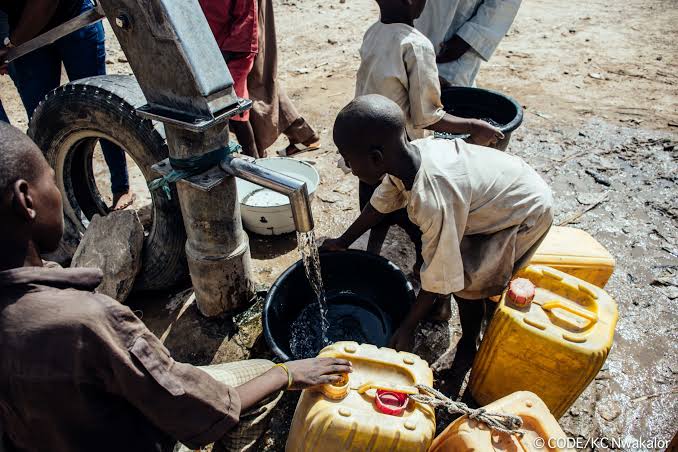
Turn on a tap. Flush a toilet. Wash your hands without a second thought. For most of us reading this, these are non-events — things we do without noticing. But for millions of people across Africa, they’re not guarantees. They’re daily negotiations with distance, cost, and risk.
Clean water isn’t just a convenience. It’s the foundation everything else is built on.
Cholera, typhoid, dysentery, chronic diarrhoea — these aren’t relics of the past. They’re still filling clinic beds today, and they hit children and the elderly hardest. What makes this so frustrating is that almost all of it is preventable. Not with expensive technology or complex interventions, but with clean water, decent sanitation, and hygiene habits that cost almost nothing to practise.
We tend to think of public health as something that happens in hospitals — doctors, medicine, machines beeping in the background. But really, it starts long before anyone gets sick. It starts in kitchens, school compounds, market stalls, backyard latrines. A child who isn’t doubled over with stomach illness is a child sitting in a classroom instead of missing school. A family that isn’t spending its income on treating preventable disease is a family that can spend it on food, on fees, on getting ahead.
Sanitation doesn’t get talked about as much as water does, but it deserves just as much attention. A well-built latrine, a drainage system that actually drains, a community that disposes of waste properly — these things quietly protect an entire neighbourhood, whether people notice them or not. When a community invests in sanitation, it’s really investing in its own future.
Then there are the small things — the ones that don’t make headlines but do the heavy lifting. Washing hands with soap. Keeping water containers covered and clean. Preparing food somewhere that isn’t a breeding ground for bacteria. None of this looks dramatic. But line these habits up, day after day, household after household, and they become one of the strongest defences a community has.
None of this rests on governments alone. It never has. It takes community leaders willing to speak up, teachers who build hygiene into everyday lessons, health workers on the ground, and neighbours who look out for each other’s wells and boreholes. Real, lasting change tends to come from exactly this kind of shared effort — not from a single policy handed down from above.
At Wem’Afrika, we don’t see clean water and safe sanitation as boxes to tick off a development checklist. We see them as questions of dignity. Of justice. Every person, no matter where they were born, deserves an environment that lets them stay healthy rather than fighting to survive it.
As Africa grows — and it is growing, fast — water, sanitation, and public health can’t be afterthoughts. They have to be part of the foundation. Healthy people build stronger families. Stronger families build stronger economies. And stronger economies build the kind of nations that last.
None of this happens overnight. It happens one protected water source at a time. One well-maintained toilet at a time. One person who now knows how to keep their family safe. Small, unglamorous, repeated actions — that’s what closes the gap between where we are and a future where preventable disease no longer decides who gets to thrive.
Clean water within reach. Sanitation treated like the priority it is. Good health as something every single person can count on. That’s the Africa we’re building toward.
YES! MY AFRICA.