
Date: 4–6 November 2025
Location: Doha, Qatar
Host: Government of Qatar
Organized by: United Nations Department of Economic and Social Affairs (UNDESA)
Theme: Rebuilding Social Development for a Sustainable and Inclusive Future
Introduction
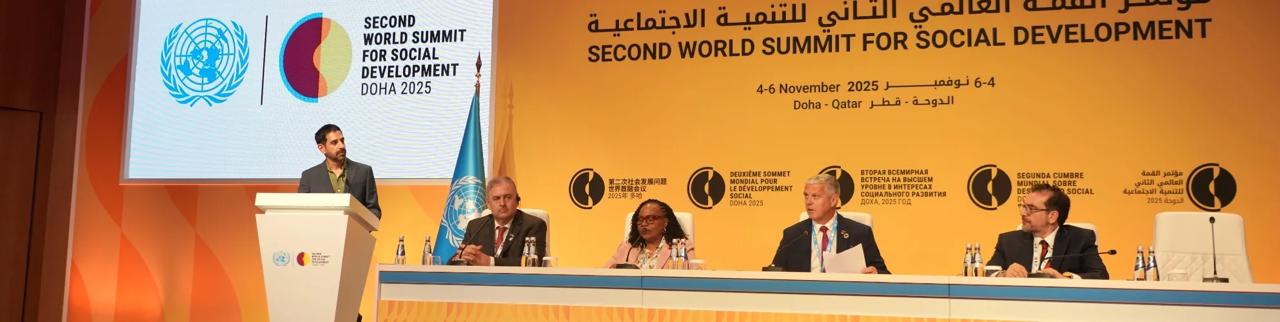
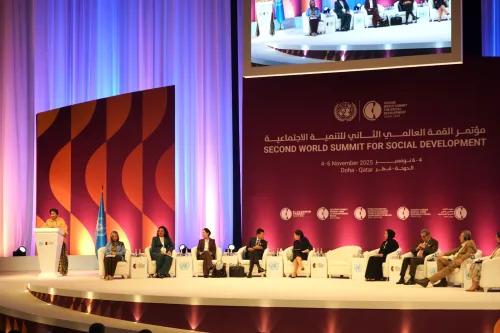
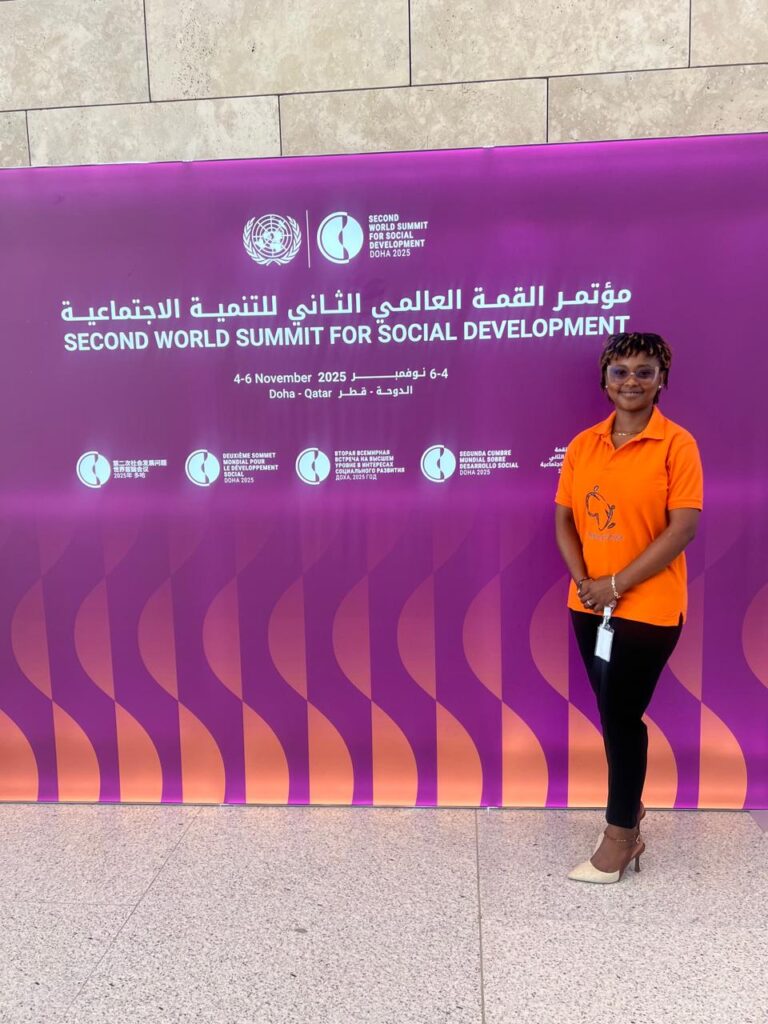
Wem’Afrika had the opportunity to participate in the Second World Summit for Social Development, held in Doha, Qatar, from 4–6 November 2025 and hosted by the Government of Qatar.
The Summit brought together Heads of State and Government, ministers, senior government representatives, civil society organizations, youth representatives, private-sector actors, international organizations, and other stakeholders from around the world. It took place 30 years after the landmark 1995 World Summit for Social Development in Copenhagen, providing an opportunity for the international community to assess progress, identify remaining gaps, and renew commitments to social development.
The Summit focused on three interconnected pillars of social development:
- Poverty eradication
- Full and productive employment and decent work for all
- Social integration
It also emphasized the need to place people at the centre of development, strengthen social justice and inclusion, and accelerate progress towards the Sustainable Development Goals.
Objectives of the Summit
The Second World Summit for Social Development had three overarching objectives:
- To renew commitment to the Copenhagen Declaration and Programme of Action by assessing progress made over the past three decades and addressing remaining gaps in social development.
- To promote social development and social justice through a strengthened and effective multilateral system.
- To advance integrated, people-centred approaches that can improve social development outcomes and accelerate social progress.
The Summit also sought to develop innovative solutions and build consensus around practical policies that advance social justice, equality, inclusion, and sustainable development.
Why the Summit Matters
The Summit recognized that social development challenges are interconnected. Poverty, unemployment, inequality, social exclusion, limited access to education and healthcare, gender inequality, and unequal opportunities cannot be addressed in isolation.
The Doha Political Declaration reaffirmed the importance of poverty eradication, decent work and employment, and social integration as mutually reinforcing areas of social development. It also connected social development and social justice with peace, security, human rights, and sustainable development.
For organizations working directly with communities, the Summit provided an important space to connect grassroots experiences with global policy discussions.
Day 1: Opening Ceremony and High-Level Discussions
The Summit opened with high-level discussions on the future of social development and the need for renewed international commitment to social justice, equality and inclusion.
One of the official high-level round tables focused on “Strengthening the three pillars of social development: poverty eradication, full and productive employment and decent work for all, and social inclusion.” The discussion brought attention to the interconnected nature of these three pillars and the importance of addressing them together.
Another high-level round table addressed progress and remaining gaps in implementing the commitments of the Copenhagen Declaration and Programme of Action, as well as ways to accelerate implementation of the 2030 Agenda for Sustainable Development.
Key takeaway
The discussions highlighted the importance of moving beyond commitments toward practical implementation, stronger partnerships, accountability, and measurable social outcomes.
For Wem’Afrika, this is particularly relevant because our work connects community-level interventions with broader issues of gender equality, education, leadership, human rights, security, environmental sustainability and social development.
Day 2: Thematic Engagement and Knowledge Exchange
The second day provided opportunities for participants to engage with different development actors, social innovators and organizations working across sectors.
Among the themes highlighted during the Summit was the role of youth, innovation, education, climate action, employment and social inclusion in building sustainable societies.
The programme also provided opportunities for participants to exchange ideas, showcase initiatives and explore potential partnerships. The official Summit programme included side events, special events and exhibitions designed to allow participants to share knowledge, present solutions and collaborate around social development priorities.
Key takeaway
One important lesson was the need to connect social development with emerging areas such as digital transformation, climate resilience, skills development and employment opportunities for young people and women.
For Wem’Afrika, these discussions provide opportunities to consider how existing gender, youth and community programmes can incorporate digital skills, entrepreneurship, environmental sustainability and leadership development.
Day 3: Gender Equality, Social Inclusion and the Future of Development
Gender equality and social inclusion were important dimensions of the broader Summit discussions.
The discussions reinforced that women and girls cannot be treated only as beneficiaries of development programmes. They must also be supported as leaders, decision-makers, innovators, entrepreneurs and participants in shaping policies that affect their communities.
The Summit also highlighted persistent barriers to social progress, including inequality, limited access to opportunities, unpaid care responsibilities, digital inequalities and the underrepresentation of women in decision-making.
Key takeaway
Gender equality needs to be integrated across development programmes rather than treated as a separate issue.
This is directly relevant to Wem’Afrika’s work with women and girls, particularly in the areas of leadership, education, economic empowerment, digital literacy, community engagement and advocacy.
Day 4: Closing Discussions and the Way Forward
The closing discussions focused on strengthening cooperation and translating global commitments into practical action.
The overall message of the Summit was that sustainable social development requires collaboration between governments, civil society, communities, international organizations, the private sector and young people.
The Summit’s Political Declaration called for integrated, people-centred approaches and renewed momentum towards the Sustainable Development Goals.
For civil society organizations such as Wem’Afrika, this creates an opportunity to ensure that community experiences and evidence contribute to broader policy conversations.
Relevance of the Summit to Wem’Afrika
Participation in the Second World Summit for Social Development provided Wem’Afrika with an opportunity to connect its grassroots work with international discussions on social development.
Several areas of the Summit are particularly relevant to Wem’Afrika’s programmes:
1. Gender Equality and Women’s Leadership
The Summit reinforced the importance of women’s participation in leadership and decision-making. This supports Wem’Afrika’s work on women’s leadership, empowerment and capacity building.
2. Youth Empowerment
The focus on employment, education, skills and innovation creates opportunities for Wem’Afrika to strengthen programmes that prepare young people for meaningful participation in their communities and economies.
3. Digital Inclusion
Digital transformation is increasingly connected to education, employment, entrepreneurship and access to information. Wem’Afrika can explore ways to strengthen digital literacy initiatives, particularly for women and girls in underserved communities.
4. Climate and Environmental Resilience
The connection between climate action, employment and social development provides an opportunity to integrate environmental sustainability into community-based programmes.
5. Social Inclusion
The Summit’s emphasis on leaving no one behind aligns with Wem’Afrika’s commitment to reaching underserved and vulnerable communities.
6. Partnerships and Advocacy
The Summit demonstrated the importance of partnerships between grassroots organizations, governments, international institutions, researchers and other stakeholders. Wem’Afrika can use these networks to strengthen its advocacy, research and capacity-building work.
Possible Opportunities for Wem’Afrika
The knowledge and connections gained through the Summit can inform future projects and partnerships, including:
- Digital Empowerment for Women and Girls: Developing community-based digital literacy and skills programmes for women and girls in underserved communities.
- Women’s Leadership and Economic Empowerment: Strengthening leadership, entrepreneurship and career-readiness programmes for women and young people.
- Climate-Smart Community Development: Integrating environmental sustainability and climate resilience into gender and community development initiatives.
- Youth Skills and Employment: Developing programmes that connect young people with practical skills, mentorship, entrepreneurship and employment opportunities.
- Community Policy Dialogues: Creating spaces where community members, civil society, researchers and policymakers can discuss local challenges and develop evidence-informed recommendations.
- Gender-Responsive Programming: Strengthening the integration of gender considerations across Wem’Afrika’s programmes and advocacy activities.
- Strategic Partnerships: Exploring collaboration with international organizations, development institutions, youth-led initiatives and other civil society actors working on social development.
Lessons Learned
The Summit provided several important lessons for Wem’Afrika:
First, sustainable development requires collaboration.
No single organization can address complex social challenges alone. Partnerships between communities, governments, civil society, international organizations and the private sector are essential.
Second, global commitments must translate into local action.
International frameworks are most meaningful when they lead to practical changes in people’s lives.
Third, inclusion must go beyond participation.
Women, young people and marginalized communities should have opportunities to influence decisions and shape policies affecting their lives.
Fourth, evidence matters.
Effective advocacy requires a combination of community experiences, research, data and consistent engagement with decision-makers.
Fifth, social development is interconnected.
Gender equality, education, employment, poverty reduction, digital inclusion, climate resilience and social protection should be considered as interconnected areas rather than isolated issues.
Click here to watch the conference
Recommendations for Wem’Afrika
Based on the lessons from the Summit, Wem’Afrika can consider the following actions:
- Adopt a gender-responsive programme framework that reflects international commitments to gender equality and social inclusion.
- Expand digital empowerment initiatives for women and girls in rural and underserved communities.
- Strengthen partnerships with regional and global organizations working on gender, youth, education, social development and community empowerment.
- Integrate climate and care-economy considerations into relevant programmes and advocacy initiatives.
- Strengthen evidence-based advocacy by documenting community experiences, collecting data and translating lessons from projects into policy recommendations.
- Continue connecting grassroots voices with policy discussions so that community experiences contribute to national, regional and global development conversations.
Conclusion
The Second World Summit for Social Development 2025 provided an important platform for reflecting on the progress made since the 1995 Copenhagen Summit and examining the challenges that continue to affect social development around the world.
For Wem’Afrika, participation reinforced the importance of connecting global policy commitments with local action.
The Summit also demonstrated that meaningful social development requires partnerships, inclusive policies, strong community participation and sustained investment in people.
As Wem’Afrika continues its work across Africa, the lessons from Doha provide an opportunity to strengthen programmes focused on women and girls, youth, leadership, education, digital inclusion, community development and advocacy.
The experience also reinforces Wem’Afrika’s commitment to ensuring that community voices are not only heard, but are connected to the conversations and decisions that shape Africa’s future.
Wem’Afrika — Yes! My Africa.
Representative Agnes Mbanda