
How educational inequality contributes to social exclusion, insecurity and the challenges of sustainable peace
By Wem’afrika | Conflict Management Department
Introduction
When discussing the causes of conflict, attention often turns to political instability, ethnic divisions, competition over natural resources, poverty and weak governance. However, one important factor that deserves greater attention is limited access to quality education.
Education is more than learning how to read, write or obtain academic qualifications. It contributes to the development of critical thinking, communication, economic independence, civic participation and peaceful coexistence.
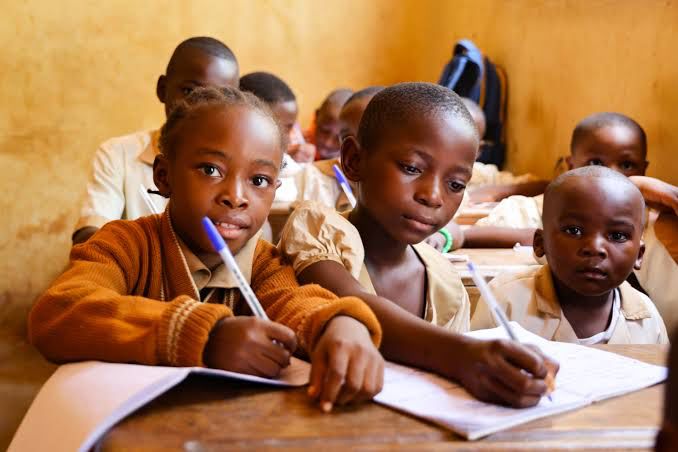
Yet, across many rural, underserved and conflict-affected communities, millions of children and young people continue to face barriers to education.
According to UNESCO’s 2026 Global Education Monitoring findings, approximately 273 million children and young people worldwide are out of school.
This raises an important question: What happens to a society when large sections of its population are denied meaningful educational opportunities?
Limited access to education does not automatically cause conflict. However, when combined with poverty, inequality, political exclusion and weak institutions, it can reinforce the conditions that contribute to instability and violence.
Understanding this relationship is essential for policymakers, educators, community leaders and peacebuilding organisations.
1. Education, poverty and economic exclusion
One of the ways limited access to education can contribute to conflict is through economic exclusion.
Education provides individuals with knowledge and skills that can improve their employment prospects, economic independence and participation in society.
When children and young people cannot access quality education, their future opportunities may become restricted.
In rural communities, these challenges can be particularly severe because of inadequate school infrastructure, household poverty, long distances to educational facilities and limited access to qualified teachers.
Over time, unequal educational opportunities can reinforce poverty and deepen existing inequalities.
Economic exclusion does not necessarily lead to violence. However, where unemployment, marginalisation and perceived injustice persist, frustration and grievances may increase.
The World Bank identifies unequal access to education, employment and other essential services as factors that can contribute to grievances and fragility.
Therefore, improving educational access should not be viewed only as a social development objective. It is also relevant to long-term conflict prevention.
2. Limited educational opportunities and vulnerability to exploitation
Children and young people who are excluded from education may face additional vulnerabilities, particularly in fragile and conflict-affected environments.
Schools can provide more than academic instruction. They may offer protection, supervision, social interaction, psychosocial support and connections to essential services.
When these protective environments are disrupted or unavailable, some children become more exposed to child labour, exploitation, early marriage and recruitment by armed groups.
UNICEF highlights the protective role of education in emergencies, including helping reduce children’s exposure to abuse, exploitation and recruitment.
However, it is important not to assume that individuals without formal education are more likely to become violent. Recruitment into armed groups is influenced by multiple factors, including coercion, insecurity, economic conditions, political grievances and social relationships.
The concern is that limited educational opportunities can remove an important source of protection and support.
For conflict prevention, this means that keeping children in safe learning environments should be considered alongside broader child protection and community security measures.
3. Educational inequality and social divisions
Education can contribute to social cohesion by creating opportunities for people from different backgrounds to interact, exchange ideas and develop mutual understanding.
Through inclusive learning environments, students may develop communication skills, empathy, tolerance and approaches to resolving disagreements peacefully.
However, education can also reproduce inequality when access is determined by gender, ethnicity, socioeconomic background, disability or geographical location.
When certain communities consistently receive fewer educational opportunities than others, perceptions of exclusion and injustice may deepen.
These inequalities can become especially concerning in societies already experiencing political or social tensions.
UNESCO’s research on education and peace emphasises that education can support peaceful coexistence, but its effects depend on what is taught, how it is taught and whether educational institutions promote inclusion and respect.
Consequently, expanding education without addressing discrimination and unequal treatment may not achieve the desired peacebuilding outcomes.
The goal should not simply be education for more people, but equitable, inclusive and quality education for everyone.
4. Education, civic awareness and peaceful participation
Education can help individuals understand their rights, responsibilities and opportunities to participate in public decision-making.
Through civic education, learners can develop knowledge of democratic processes, human rights, public institutions and non-violent approaches to expressing grievances.
These skills are important because conflicts often involve competing interests, disagreements and perceptions of injustice.
The ability to communicate concerns, negotiate differences and participate constructively in society can help individuals and communities manage disagreements without resorting to violence.
UNESCO’s 2026 research on education and justice highlights the role of education in strengthening people’s understanding of rights and supporting fairer societies.
However, education must encourage independent thinking rather than simply transmitting information.
An education system that promotes discrimination, intolerance or political manipulation can contribute to division instead of peace.
This reinforces the importance of responsible curricula, qualified teachers and inclusive educational policies.
5. The relationship between education and conflict works in both directions
While educational inequality may contribute to conditions associated with conflict, conflict itself is one of the greatest threats to education.
Armed violence can destroy schools, displace teachers, interrupt examinations and prevent children from attending classes.
Families affected by insecurity may be forced to relocate, while some children abandon education to support household survival.
The consequences can continue long after active violence has ended.
In September 2025, UNICEF and the Norwegian Refugee Council reported that nearly 15,000 schools across West and Central Africa had been forced to close because of violence and conflict, affecting an estimated three million children that year.
These disruptions represent more than lost classroom hours.
They can contribute to learning gaps, emotional distress, reduced economic opportunities and increased vulnerability.
A child who loses several years of schooling may face long-term disadvantages in employment, civic participation and personal development.
As a result, conflict and educational deprivation can reinforce each other, creating challenges that extend across generations.
Breaking this cycle requires sustained investment in education during conflict, recovery and peacebuilding.
6. Rural communities and the challenge of educational access
The challenges of educational inequality are particularly important in rural communities.
For some families, education may be available in principle but difficult to access in practice.
A school may exist, yet children may still face barriers such as transportation costs, inadequate classrooms, insufficient learning materials, household responsibilities or insecurity.
Girls may experience additional barriers linked to gender expectations, early marriage, menstruation-related challenges and unequal household responsibilities.
Boys may also face pressure to engage in agricultural work, informal employment or other income-generating activities.
These experiences demonstrate that educational access cannot be measured simply by counting schools.
It must also consider whether children can attend regularly, learn safely, complete their education and develop useful skills.
For rural development and conflict prevention, these distinctions matter.
Communities cannot fully benefit from education when structural barriers continue to prevent meaningful participation.
7. Wem’afrika’s Perspective: Education as a Foundation for Sustainable Peace
At Wem’afrika, we believe that education should be understood not only as a fundamental human right but also as an important component of human security, community resilience and sustainable peace.
Our work across research, capacity building, conflict management, human rights, gender and community engagement reinforces the importance of addressing challenges at the community level.
From our perspective, conflict prevention must begin by understanding the everyday inequalities that affect people’s lives.
When a child cannot attend school because of poverty, when a young person lacks opportunities to develop employable skills, or when a rural community has limited access to educational resources, these challenges extend beyond the education sector.
They affect dignity, participation, economic security and future opportunities.
We recognise that education alone cannot resolve conflict. Peace also requires accountable institutions, justice, economic opportunities, inclusive governance and respect for human rights.
However, education can help create conditions in which individuals are better equipped to understand differences, communicate constructively and participate in building their communities.
What Wem’afrika believes should be prioritised
First, educational access must be inclusive.
Governments and development partners should pay greater attention to rural, marginalised and conflict-affected communities, where barriers to education may be more difficult to overcome.
Second, peace education should become part of learning and community engagement.
Young people should have opportunities to develop conflict management, communication, negotiation, empathy and problem-solving skills.
Third, education should connect with capacity building and economic empowerment.
Vocational training, mentorship, entrepreneurship education and professional development can help young people develop practical skills and explore livelihood opportunities.
Fourth, communities should participate in educational decision-making.
Parents, teachers, young people, traditional authorities and local organisations should have opportunities to identify barriers and contribute to solutions.
Finally, education must remain a priority during conflict and recovery.
Protecting schools, supporting displaced learners and rebuilding educational services are essential for reducing long-term vulnerability.
For Wem’afrika, sustainable peace is not simply the absence of violence. It also involves creating conditions in which people have opportunities to learn, participate, develop and live with dignity.
8. Recommendations for policymakers and development practitioners
Addressing educational inequality as part of conflict prevention requires coordinated action.
1. Strengthen rural educational infrastructure. Invest in accessible schools, qualified teachers, safe learning environments and essential educational resources.
2. Address economic barriers to education. Support vulnerable households through appropriate social protection, school feeding programmes, scholarships and other measures that reduce the financial burden of schooling.
3. Integrate peacebuilding into education. Promote human rights education, critical thinking, dialogue, non-violent communication and conflict resolution skills.
4. Protect education in conflict-affected communities. Strengthen measures to protect learners, teachers and educational facilities while supporting alternative learning arrangements when schooling is disrupted.
5. Expand youth capacity-building opportunities. Connect formal education with vocational training, mentorship, entrepreneurship and employability programmes.
6. Promote inclusive educational governance. Ensure that girls, boys, displaced populations, persons with disabilities and marginalised communities are considered in educational planning and implementation.
These approaches should be adapted to local circumstances and developed with meaningful community participation.
Conclusion: Can We Build Sustainable Peace Without Addressing Educational Inequality?
Education is not a guarantee of peace, just as limited education is not a guarantee of conflict.
Nevertheless, educational inequality can reinforce social exclusion, economic vulnerability and grievances that contribute to instability.
At the same time, inclusive and quality education can support social cohesion, civic participation, economic opportunity and resilience.
This relationship reminds us that conflict prevention must extend beyond security responses and political negotiations.
It must also address the structural conditions that shape people’s lives and opportunities.
At Wem’afrika, we believe that investing in education is an investment in people, communities and the long-term foundations of peace.
The question is not only whether children have schools to attend, but whether education provides them with meaningful opportunities to build a better future.
Because sustainable peace requires more than ending violence. It requires addressing the inequalities that can allow grievances and insecurity to persist.
Wem’afrika — Yes! My Africa.