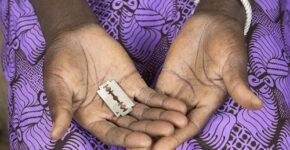

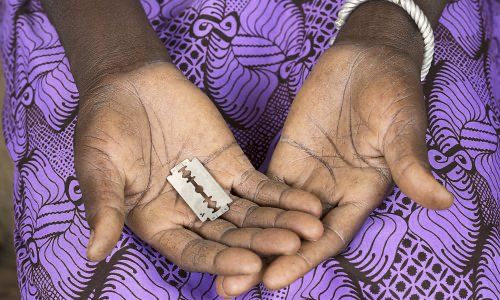
Female Genital Mutilation/Cutting (FGM/C) comprises all procedures involving partial or total removal of the female external genitalia or other injury to the female genital organs for non-medical reasons, as defined by the World Health Organization.
FGM is carried out for cultural, religious and/or social reasons on young girls between infancy and the age of 15. FGM constitutes a form of child abuse and violence against women and girls; it has severe short- and long-term physical and psychological consequences.
The agency of the female body should be given solely for the girl/woman to decide what she wants to do. As one of the traditional practices that take place in Africa, Female Genital Mutilation is one violation of human rights. In Cameroon 20 per cent of women are victims of female genital mutilation (FGM)1. This is a high number seeing the impact it has one girl’s health and psychological wellbeing. This year the world is celebrating zero tolerance of FGM saying “No Time for Global Inaction, Unite, Fund, and Act to End Female Genital Mutilation.”
As part of the working group, Wem’afrika also advocates for Zero Tolerance in protecting girls and promoting their human rights. In a world of globalization, it is possible to see how individual rights are advocated more than collective interest. The notion behind FGM is a cultural practice that takes place from generation to generation for the sake of societal benefits without assessing the impact it has on the individual. As Africa is a community oriented society, it is possible to see the practice as satisfying the societal interest while violating girls’ right. This is where to see the individual human rights and collective interest towards FGM.
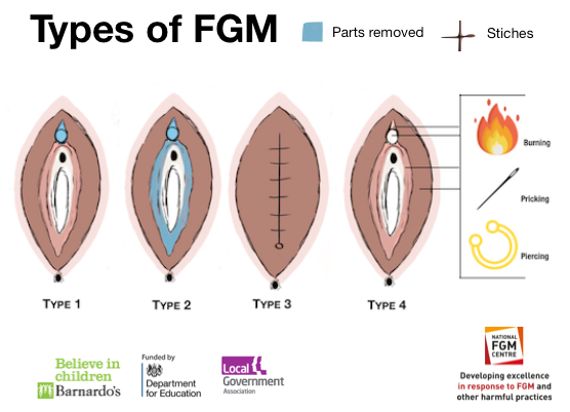
FGM is a traditional practice exercised in belief of societal and cultural benefit for the girl. It is believed to contribute for hygiene, fertility, increasing the girls’ value for marriage and fidelity2. It is also believed to have traditional notion that increases acceptability and integration into the community3.
1. this practice and the ethnic groups most affected; laws on FGM; and state protection (2002 – May 2005), 25 May 2005, CMR43538.FE, available at: https://www.refworld.org/docid/440ed6e628.html [accessed 26 January 2022]
2. Canada: Immigration and Refugee Board of Canada, Cameroon: Female genital mutilation (FGM), including the prevalence of Lewis, 2009
This is where to understand affecting an individual’s body and health to respond to the collective interest. FGM has a psychological and biological effect on women where they will suffer throughout their lives. It is feasible to see the physical and health impacts of FGM/C. Women are likely to contract Human Immune Virus (HIV) from the practice of traditional FGM, this conflicts with Article 124. Resulting from the practice, it is common to see death in many African communities that violate the Right to Life. In most cases, girls are the ones to go through FGM and this violates their best interest, health, and freedom of expression (Art 3, Art 17, and Art 135 respectively).
Even if human right is a universal concept, it is not applicable to all human beings as it is culturally affected. This is where to see the collective side of human interaction and human rights. It does not give an opportunity to be viewed by the collectivist society to formulate rights that are workable for both individuals and society. This always leads to violation of human rights, especially most vulnerable ones.
Seeing these women who have gone through FGM, the decision was not solely on the person. The girls were denied the opportunity to express their thoughts and to make decisions over their bodies. Not only the girls, but a mother who went through the same procedure, cannot stop the act from happening to her daughter fearing society’s response. Such acts are beyond personal agency and tend to involve extended families and community members to make decisions over a person’s life. This happens only to value what society expects, but also not to deviate from social norms, and to be considered as an obedient one.
Now is the time to act and respond to FGM as it is a violation of human rights. With respect to the societal expectations, it is important to value girls’ right as it affects her wellbeing. This is where Wem’afrika advocates in supporting Sustainable Development Goal plans 5, gender equality. Girls and women should be given equal right to decide on what to do with their bodies. Our culture should benefit women and girls rather to violate their rights and expose them to danger. The value we give for our culture should harness with valuing a person.
3. Shelley, 1993
4. ICESCR
5. UNCRC
One person is the first one to create a community, without the contribution and involvement of women and girls, the society will not be full and equal.
Click to watch our webinar on FGM
Author
MAHLET ENDALKU BESHAH
Gender officer at Wem’afrika (2022-2023)