
By Wem’afrika | Security Department I Environment
Food availability does not guarantee food security. Understanding why people struggle to access nutritious food is essential for protecting health, dignity and community stability.
Introduction
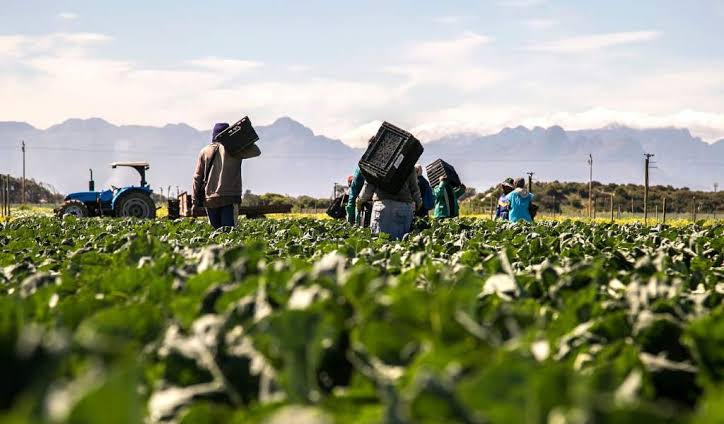
Imagine living in a community where food is grown, harvested and sold every day, yet some families still struggle to afford nutritious meals.
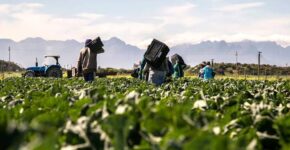
Farmers cultivate crops, women sell agricultural products in local markets, and households participate in food production. However, despite these activities, food insecurity remains a challenge.
This raises an important question:
If food exists, why are people still experiencing hunger and food insecurity?
Food insecurity is often associated with insufficient agricultural production. While food shortages are an important concern, the problem extends beyond how much food is available.
For many individuals, particularly those living in rural and underserved communities, the challenge is having the financial resources, physical access and stability necessary to obtain sufficient, safe and nutritious food.
According to The State of Food Security and Nutrition in the World 2026, approximately 2.1 billion people experienced moderate or severe food insecurity in 2025. In Africa, more than half the population experienced moderate or severe food insecurity.
These figures demonstrate that food insecurity remains a major global development and human security challenge, even where food production and distribution systems exist.
Addressing this challenge requires examining the relationship between food access, poverty, gender inequality, health, livelihoods and security.
1. Understanding Food Security: Availability Is Not Enough
The Food and Agriculture Organization of the United Nations (FAO) identifies four interconnected dimensions of food security:
Food availability: Whether sufficient quantities of food are produced, imported, stored and supplied through markets.
Food access: Whether individuals and households have the financial resources and physical ability to obtain food.
Food utilisation: Whether food is safe, nutritious and appropriately consumed, alongside access to clean water, sanitation and healthcare.
Food stability: Whether individuals and households can maintain access to sufficient food over time, including during economic, environmental and social disruptions.
These dimensions explain why food production alone cannot guarantee food security.
For example, a community may have sufficient agricultural products in its markets, but families experiencing unemployment or low incomes may still struggle to purchase them.
Similarly, a farmer may produce crops but sell a large proportion of the harvest to meet other household expenses, leaving limited resources for a diverse and nutritious diet.
Therefore, measuring food security requires more than examining agricultural output. It also requires understanding purchasing power, market access, nutritional needs and household vulnerability.
2. Why Do Rural Communities Experience Food Insecurity?
Rural communities often play an important role in agricultural production. Nevertheless, participation in food production does not automatically protect households from food insecurity.
Several factors can contribute to this contradiction.
Poverty and limited purchasing power
Income determines whether individuals can afford food, particularly when they rely on markets for part of their daily consumption.
Households with limited financial resources may prioritise cheaper foods, reduce meal sizes or sacrifice dietary diversity to meet other essential expenses.
Poor infrastructure and market access
Inadequate roads, transportation difficulties and limited storage facilities can affect the movement of agricultural products and increase costs.
These challenges may also reduce farmers’ earnings and make nutritious foods less affordable for consumers.
Seasonal and environmental challenges
Droughts, floods, unpredictable rainfall and other environmental disruptions can affect crop yields, agricultural income and food prices.
Households that depend heavily on seasonal agricultural activities may experience periods of food insecurity even when food is available at other times of the year.
Limited access to agricultural resources
Some smallholder farmers face challenges accessing land, financing, irrigation, technology, training and reliable markets.
These barriers can reduce productivity and limit opportunities to improve household livelihoods.
Conflict and insecurity
Armed conflict and insecurity can interrupt farming, restrict access to markets, displace communities and disrupt transportation routes.
In such circumstances, food insecurity may worsen even where agricultural production remains possible.
Together, these challenges demonstrate that food insecurity is closely connected to wider economic, environmental and governance conditions.
3. Women, Food Production and Unequal Access to Resources
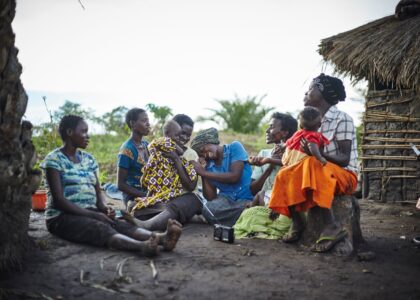
Women contribute significantly to agricultural production, food processing, trading and household nutrition across many African communities.
However, their participation in food systems does not always translate into equal access to resources or decision-making opportunities.
In some communities, women face barriers to land ownership or control, agricultural financing, training, technology and profitable markets.
Household responsibilities and unpaid care work can further limit the time available for income-generating activities.
For example, a rural woman may spend much of her day cultivating crops, selling products and caring for family members, yet have limited control over household income or decisions about food expenditure.
These inequalities can affect women’s economic independence and nutritional well-being.
Pregnant and breastfeeding women may face additional nutritional needs, making reliable access to diverse and nutritious foods particularly important.
However, food insecurity should not be viewed exclusively as a women’s issue.
Men may also experience economic insecurity, unemployment, agricultural losses and difficulties fulfilling household food needs.
An effective response must therefore consider the experiences of women, men, children and other vulnerable groups while recognising that their circumstances and barriers may differ.
4. Food Insecurity as a Public Health Challenge
Food insecurity affects more than whether people feel hungry.
Limited access to nutritious food can contribute to malnutrition, micronutrient deficiencies, poor physical health and reduced well-being.
For children, inadequate nutrition can affect growth, development, learning and resistance to illness.
For adults, poor dietary quality may contribute to fatigue, reduced productivity and increased vulnerability to certain health conditions.
Women of reproductive age may face particular concerns related to iron deficiency and anaemia.
Food insecurity can also affect mental well-being.
Uncertainty about obtaining food, financial pressure and the responsibility of providing meals for family members can create stress and anxiety.
Importantly, food insecurity does not always mean that individuals consume too little food.
Some households may obtain sufficient calories but lack access to the diverse, nutritious foods needed for a healthy diet.
This demonstrates why nutrition education, healthcare, clean water and household economic security should be considered alongside food production.
5. Why Is Food Insecurity a Human Security Concern?
Human security places individuals and communities at the centre of security discussions.
Rather than focusing exclusively on military threats or territorial protection, it considers the conditions necessary for people to live safely and with dignity.
The United Nations Development Programme identifies food security as one of seven interconnected dimensions of human security, alongside economic, health, environmental, personal, community and political security.
Food insecurity can affect several of these dimensions simultaneously.
Economic security: Households may lose income or struggle to meet basic needs.
Health security: Poor nutrition can increase health risks and affect physical well-being.
Environmental security: Climate-related shocks and environmental degradation may threaten food production and livelihoods.
Community security: Competition over resources and unequal access may contribute to grievances and tensions in certain contexts.
Personal security: Severe food insecurity can increase vulnerability to exploitation, harmful coping strategies and unsafe living conditions.
These relationships demonstrate why food security should not be treated only as an agricultural concern.
It is also relevant to public health, poverty reduction, community development, social protection and peacebuilding.
6. Can Food Insecurity Contribute to Conflict?
Food insecurity and conflict can influence each other.
Conflict can disrupt food production, damage infrastructure, restrict trade and displace agricultural communities.
At the same time, severe food insecurity may intensify existing grievances, particularly when communities experience unequal resource distribution, poverty or weak governance.
For example, competition over land, water and grazing resources may contribute to tensions where institutions are unable to manage competing interests fairly.
However, food insecurity does not automatically cause violence or armed conflict.
The relationship depends on political, economic, social and institutional conditions.
It is therefore important for policymakers and peacebuilding practitioners to examine food insecurity as one possible contributor to vulnerability and instability rather than as a single explanation for conflict.
Improving food security can support community resilience, but sustainable peace also requires inclusive governance, justice, accountability and effective conflict management.
7. Wem’afrika’s Perspective: Food Security Must Begin With People
At Wem’afrika, we believe that food security should be understood as an essential component of human security, health and sustainable community development.
Our work in research, gender, security, environmental sustainability and community engagement highlights the importance of examining development challenges from the perspective of those who experience them.
For rural women and men, the question is not simply whether food is produced in their communities.
It is also whether they can access it, afford it, benefit nutritionally from it and maintain that access during periods of economic or environmental difficulty.
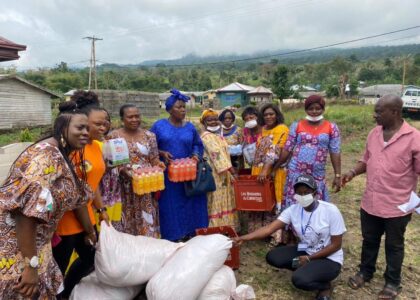
Through our Seeds of Change: Community Women Initiative, Wem’afrika has incorporated nutrition education, economic empowerment, financial literacy, leadership development and health awareness into its engagement with rural women.
This approach reflects the importance of addressing the wider conditions that influence women’s well-being and household security.
From our perspective, five areas deserve greater attention.
First, food security interventions must address accessibility
Increasing agricultural production is important, but it must be accompanied by measures that improve household purchasing power, market access and affordability.
Second, nutrition education should be integrated into community programmes
Communities need practical information about balanced diets, food safety, nutritional needs and healthy food preparation.
However, education must be accompanied by realistic opportunities to obtain nutritious foods.
Third, women’s economic empowerment matters
Improving women’s access to resources, financial literacy, entrepreneurship opportunities and decision-making can support household resilience.
Fourth, men and women should participate in food security discussions
Food insecurity affects entire households. Community interventions should encourage shared responsibility and inclusive participation while recognising gender-specific inequalities.
Fifth, food security requires collaboration
Government institutions, farmers, healthcare professionals, civil society organisations, community leaders and development partners should work together to address the interconnected causes of food insecurity.
For Wem’afrika, strengthening food security means creating conditions in which individuals and families can access nutritious food with dignity and stability.
8. Recommendations for Policymakers and Development Practitioners
Addressing food insecurity requires coordinated interventions that respond to the realities of local communities.
1. Improve access to affordable nutritious food.
Strengthen food distribution systems, local markets and appropriate social protection programmes for vulnerable households.
2. Support smallholder farmers.
Improve access to agricultural training, financing, storage, irrigation and markets.
3. Invest in rural infrastructure.
Develop reliable roads, transportation networks and storage facilities to reduce barriers between producers and consumers.
4. Promote women’s economic empowerment.
Support women’s access to productive resources, entrepreneurship opportunities, financial services and agricultural decision-making.
5. Integrate nutrition education into community development.
Provide practical, culturally appropriate information on dietary diversity, food safety, maternal nutrition and child feeding.
6. Strengthen climate resilience.
Support sustainable agricultural practices, water management and locally appropriate adaptation strategies.
7. Improve food security monitoring.
Collect information on food affordability, household dietary diversity, market accessibility and seasonal vulnerability.
8. Encourage community participation.
Ensure that women, men, farmers, young people and other community members contribute to identifying challenges and designing interventions.
Conclusion: Food Security Is About More Than Food Production
Food insecurity is not always the result of insufficient food production.
In many communities, food may be available, yet poverty, unequal access to resources, inadequate infrastructure, conflict and other challenges prevent people from obtaining sufficient, safe and nutritious meals.
This distinction is important because policies that focus exclusively on agricultural output may fail to address the economic and social conditions affecting food access.
Food insecurity also extends beyond hunger. It influences health, livelihoods, human dignity, community resilience and, in some circumstances, social stability.
At Wem’afrika, we believe that meaningful food security interventions must place people at the centre of development efforts.
The existence of food does not guarantee food security. Food security becomes meaningful when people can consistently access, afford and benefit from nutritious food.
As policymakers, development practitioners and community leaders, we must therefore ask:
Are we measuring food security by how much food is produced, or by how many people can actually access the food they need?
Wem’afrika — Yes! My Africa.